A draft arrives quickly. Then you spend the afternoon checking facts, rebuilding the formatting and explaining the missing context to someone else. The generation time looks good; the economics of the whole job are less clear.
This experiment applies the Outcome Driven handoff method to a small service business. Choose one deliverable you already understand and measure the effort required to make it usable. No income or time-saving result is assumed.
Our fictional example is a client onboarding checklist. The prototype screens show how to structure the work; they are not records of an actual client project.
1. Choose a job with an observable acceptance rule
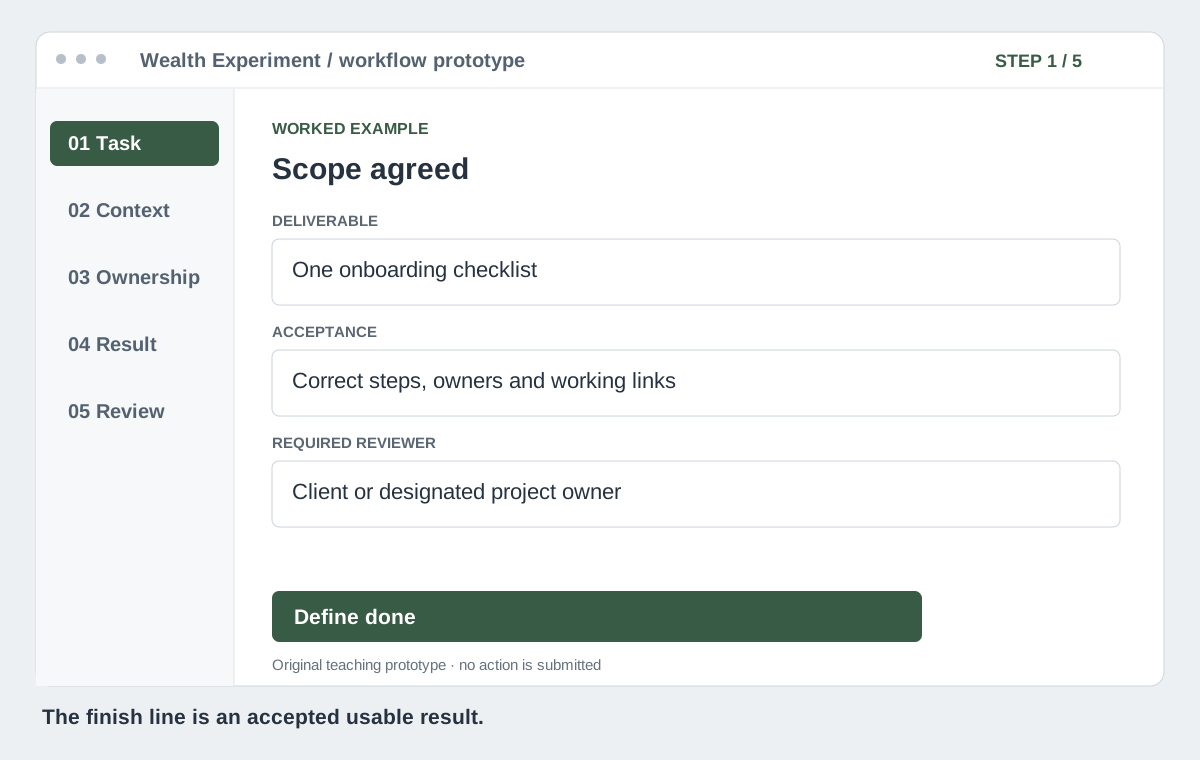
Use a bounded deliverable, such as an onboarding checklist for one service. Define what must be correct, what evidence supports it and who can accept it. “Looks professional” is too vague to tell you whether the job is finished.
Write the client inputs you need and the decisions only the client can make. If access or approval is missing, record that as a blocker. Do not count a prepared draft as delivered simply because the next person has not yet reviewed it.
2. Prepare a transfer brief before drafting
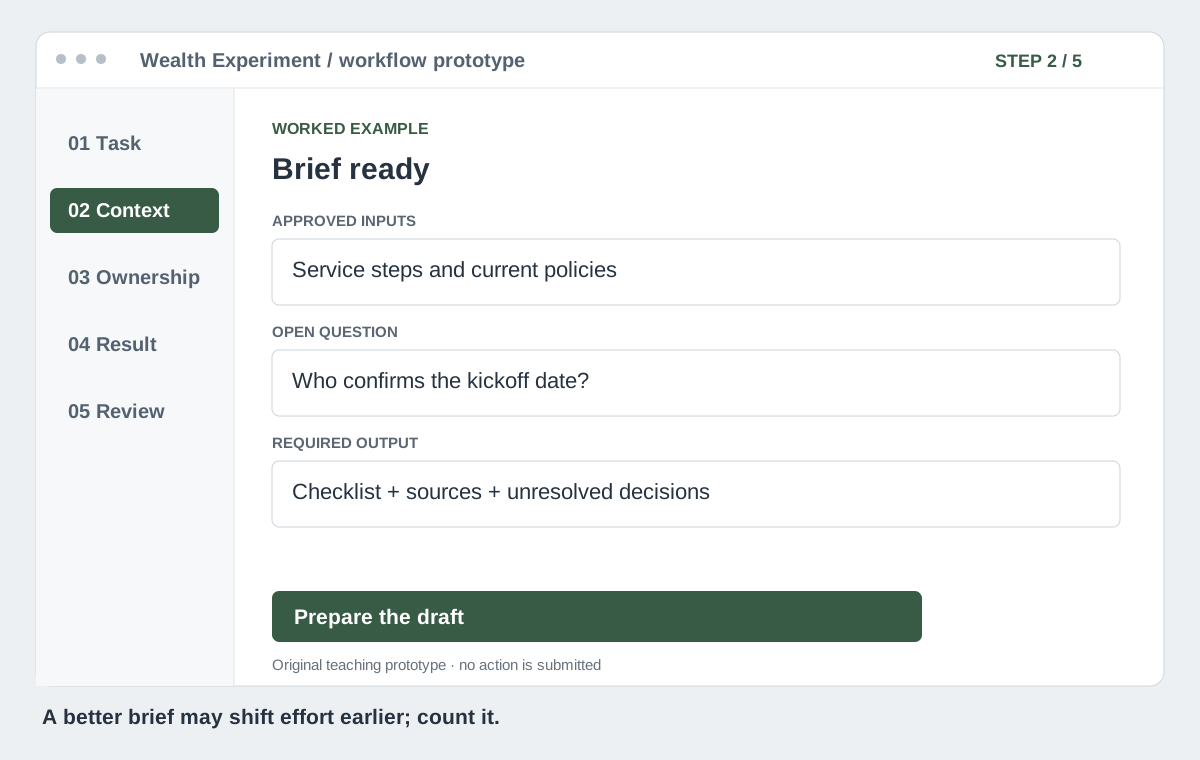
Give the AI workflow the customer goal, approved inputs, constraints, output format and open questions. Separate facts from assumptions. Keep private client information within tools and permissions approved for that work.
Ask for a draft plus a short list of unresolved decisions and source references. The next reviewer should be able to see which parts need judgment without reverse-engineering the entire conversation. Preparation effort belongs in the time log.
3. Make review a recorded part of production
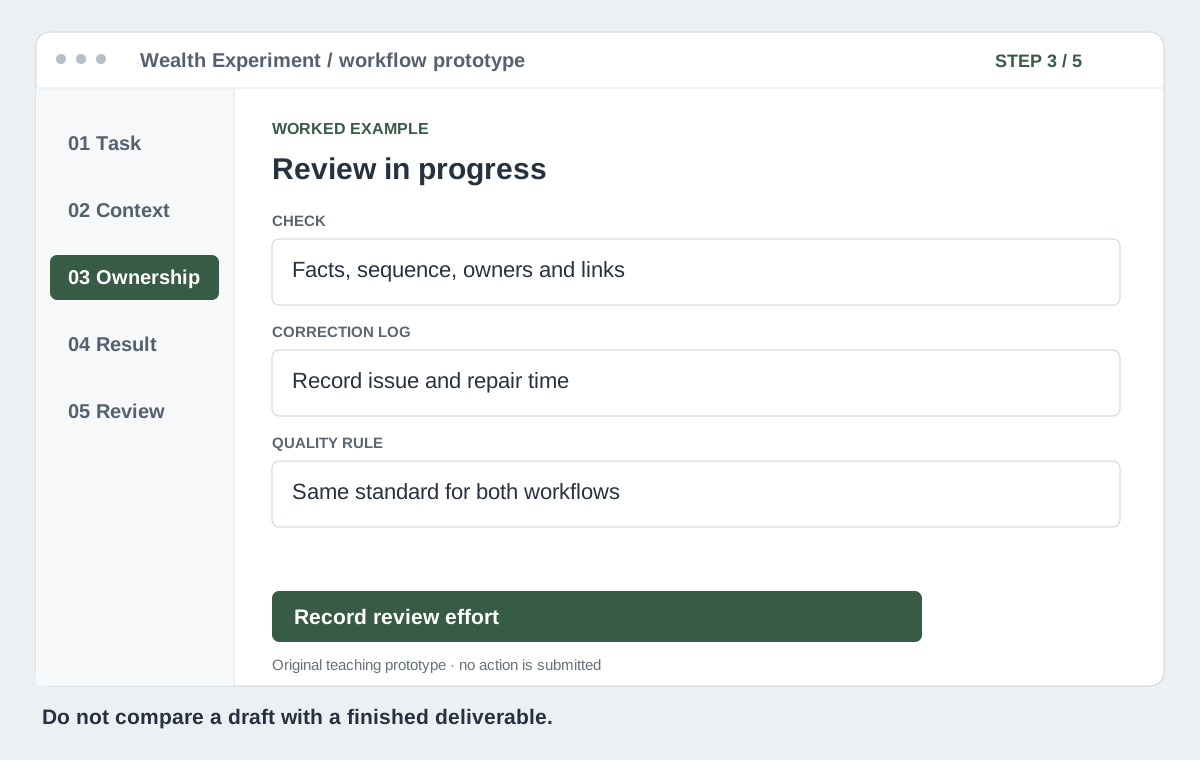
Check the draft against the acceptance rule. Record factual corrections, missing steps, broken links and time spent making the document usable. If you hand it to a collaborator, include what you already verified and what remains unresolved.
Use the same quality standard for a manual comparison. A faster but incomplete deliverable is not equivalent output. Include failed attempts and discarded drafts in your observations, not just the most impressive run.
4. Confirm acceptance and preserve the receipt
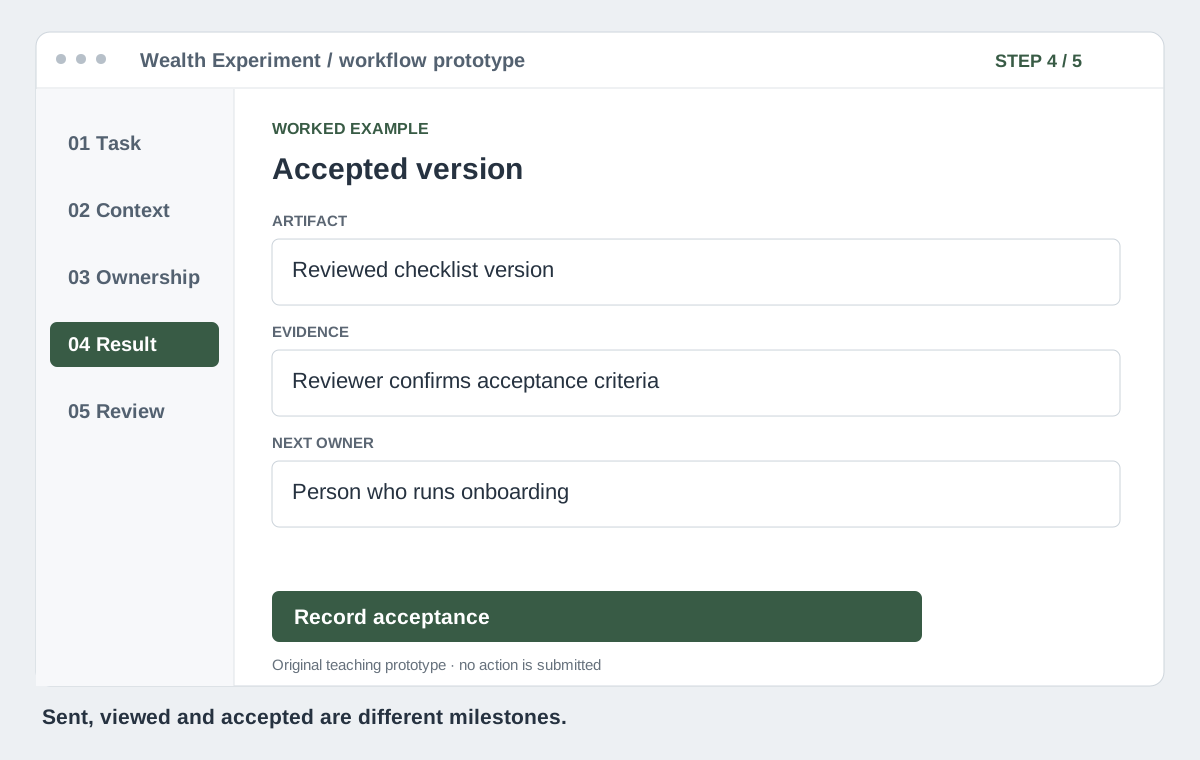
When the reviewer accepts the checklist, record the version and any remaining conditions. If the client requests changes, continue the same work record. This keeps revision effort attached to the job that created it.
A delivery receipt can be a simple project note: artifact location, version, acceptance evidence and next owner. It should not expose private material in a public portfolio. Use a sanitized description if you later share what you learned.
5. Compare total effort and decide what to keep
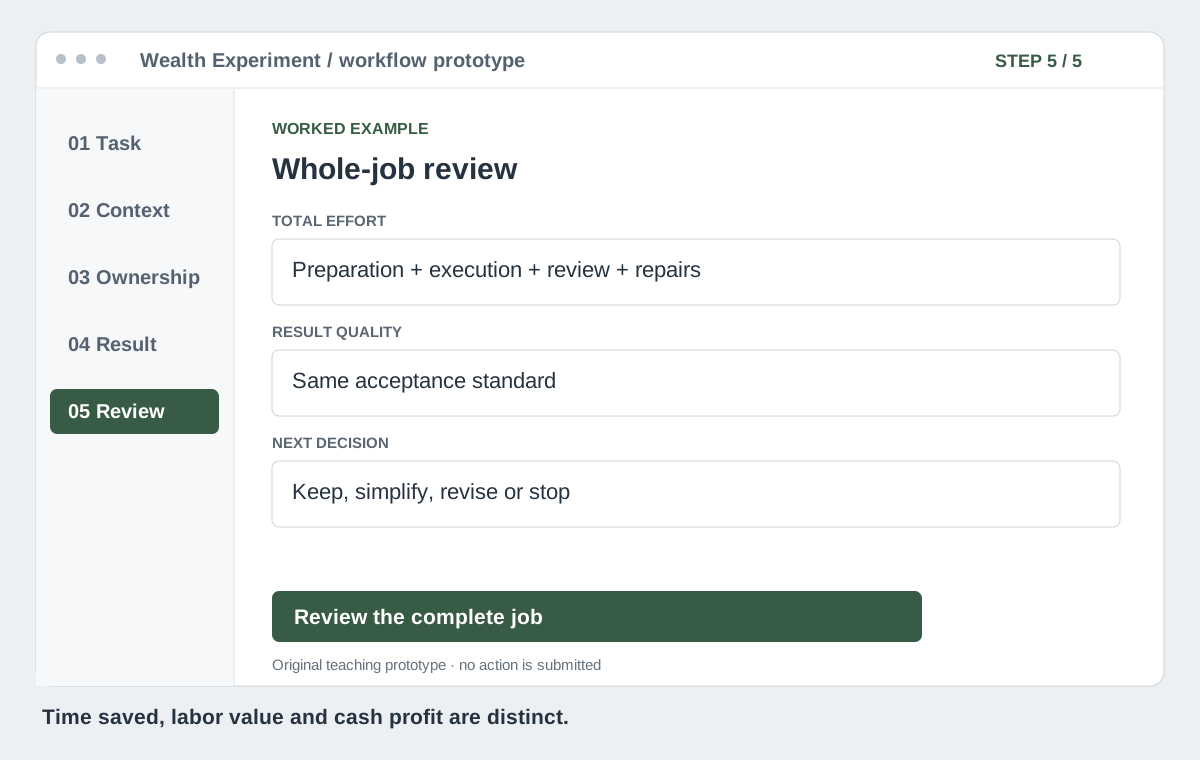
For each attempt, log preparation, execution, review, corrections and transfer time. Also record tool cost and the acceptance result. Compare similar tasks under comparable conditions; repeated practice and different task difficulty can distort a before-and-after comparison.
For an illustrative calculation, 60 minutes of manual work versus 15 minutes preparing, 5 drafting, 25 reviewing and 20 repairing an AI-assisted result means 65 minutes of total effort. The numbers are invented. The point is to count all the work, not claim a saving.
If you assign an hourly cost to your own time, label it an assumption. Labor value is not cash profit. Revenue minus fees, direct costs and actual delivery expense tells you something different from minutes saved. A small pilot is useful for choosing the next test; it does not establish a general earnings claim.
Try it with one real piece of work
Use the workflow run log to capture attempts and the bounded AI workflow experiment to choose your task. Begin with work you can judge yourself.
The useful discovery may be a better brief, a clearer approval step or a smaller task. An experiment has value when it changes the decision you make—even if the first workflow saves no time.