In this article
Begin with curiosity, then narrow the question
The Impact research is a useful invitation to examine how people find and evaluate an offer. It is not a forecast of your income.
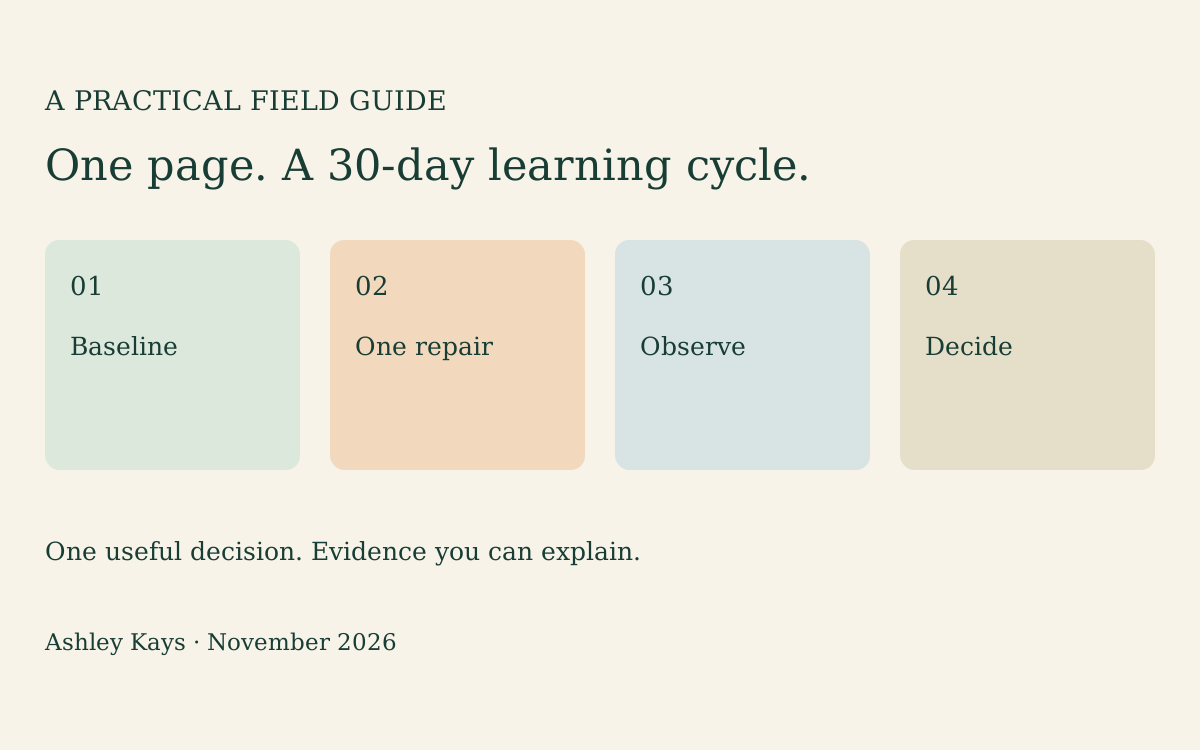
Instead of rebuilding everything for AI, choose one page and one customer question. The experiment is to make that decision easier and watch what happens. You can do useful work here even with a small audience, as long as you are honest about what the sample can tell you.
Write the experiment before changing the page
Use this sentence: “People considering [offer] hesitate because [specific uncertainty]. If I explain [missing information], I expect [observable next step] to become easier.” Choose an uncertainty you have heard from someone, rather than one invented only by an assistant.
For example, a fictional workshop page may explain the topic but omit what participants should bring. A clearer preparation section could reduce confused questions. That is a testable usability hypothesis, not evidence that more people will pay.
Week one: collect a small baseline
Record the current page, offer, traffic sources, completed enquiries or purchases and common questions. If you have no traffic, invite a few relevant people to inspect the page and explain the offer back to you. Keep that feedback separate from normal visitor data.
Choose a time budget you can sustain—perhaps two hours for preparation and one hour a week for review. These are suggested limits, not required targets. Include research, tool setup, editing, failed attempts and follow-up in the effort log.
Week two: publish one meaningful repair
Answer the unresolved question in plain language. Add a real example where possible. Make the next action clear and test the link or form using your normal approved process. Avoid changing price, audience, channel and layout at the same time if you want to learn about the information gap.
Ask AI to criticize the draft using only the facts you supplied. Then verify the final page yourself. Save a dated copy of the earlier version so you can explain exactly what changed.
Weeks three and four: record signals without inflating them
| Signal | What it supports | What it does not prove |
|---|---|---|
| Reader explains the offer correctly | Improved understanding in that test | Market demand |
| Qualified enquiry | A relevant person wants to discuss it | A paid sale |
| Completed paid work | A real transaction and delivery | Repeatable profit |
| AI citation | Visibility in the recorded answer | Traffic or revenue |
Record zeros and unknowns differently. Zero accepted enquiries in a measured period is a result. An unavailable analytics report is missing information. Do not turn the second into the first.
End with a decision that fits the evidence
Keep the change if it resolves a genuine misunderstanding and introduces no new problems. Revise the offer when people understand it but repeatedly say it does not meet their needs. Pause additional spending when you cannot reach an appropriate audience or verify the handoff.
If traffic is too small, call the commercial result inconclusive. You can still report the work completed and the questions learned. Count revenue minus direct costs and all hours before deciding that a promising experiment deserves more time.
Put it to work
Use the First Experiment Planner to define one audience, one offer and one checkable next step. Put the review date on your own calendar before you start.
Sources and editorial context
Reviewed November 3, 2026. This is independent editorial analysis. The exercises, sample briefs and decision rules are our recommendations; they are not results reported by the sources or measured client outcomes.