Build with Ashley
I built 7 online brands. Here is the map behind them.
Steal the thinking behind seven brands: the customer, offer, tools, workflow, and next useful test. Get the free map and shape an offer of your own.
In this guide
The useful starting point
Start with one customer, one problem, and one useful offer. The Steal My Stack map shows seven different ways to connect them, with current availability, practical workflows, tools, and a worksheet you can use.
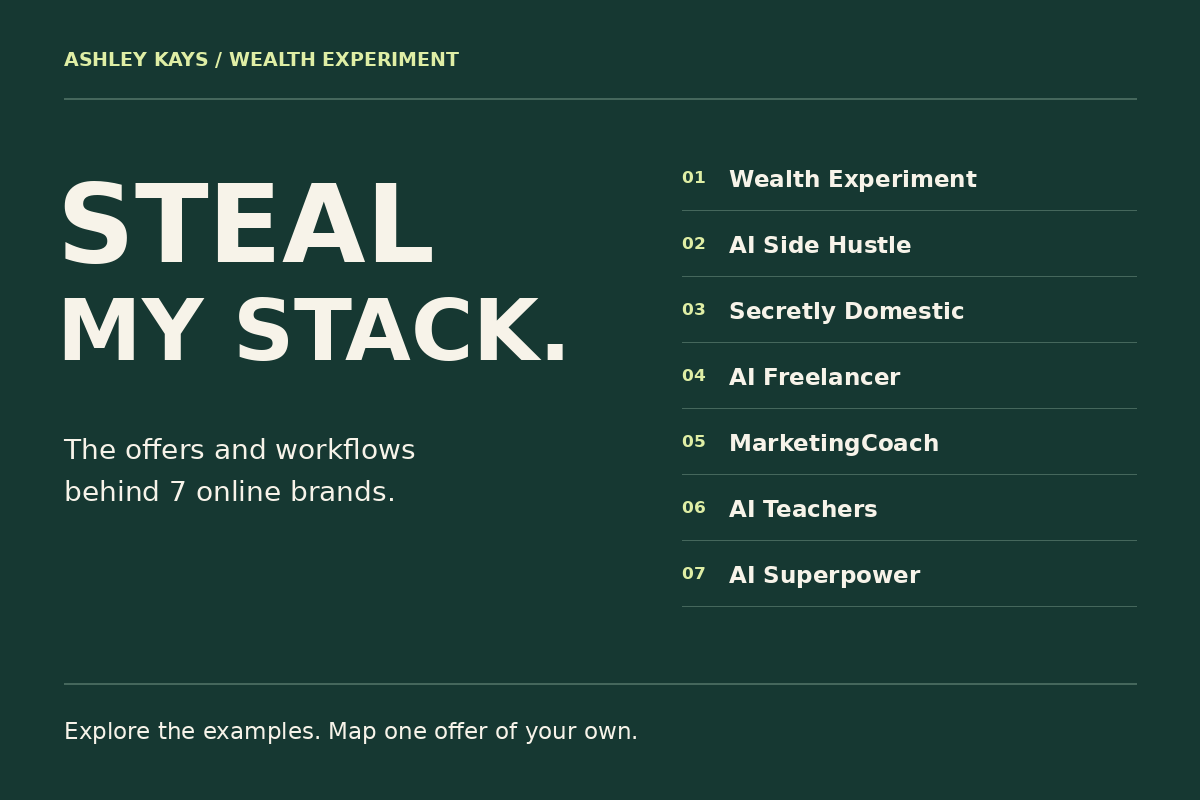
I built seven online brands and wanted a useful way to explain what sits behind them: the people they serve, the offers they make, and the work involved in delivering something valuable. So I put the pieces into one map.
Explore the complete Steal My Stack map, or download the free 10-page PDF to keep beside you while you work.
Seven examples you can learn from
Each example starts with a different customer and a different kind of useful result.
- Wealth Experiment: choose an idea and turn it into a practical experiment. Free tools and a free founding workshop help you get started; private support is available through the wider Waymaker offers.
- AI Side Hustle: shape a first offer around your skills and a customer's problem. Free guides and decision tools can lead to relevant, disclosed partner referrals.
- Secretly Domestic: turn practical creativity into something another household can use. Free holiday minis are available while the paid seasonal kits are being developed.
- AI Freelancer: define a client result, a sensible scope, and a way to deliver it. Paid work begins with a fit conversation and agreement on scope, price, and timing.
- MarketingCoach: connect a clear offer with the people who need it. Consulting and ongoing coaching help customers choose and carry out a useful marketing direction.
- AI Teachers: teach an AI workflow through a real task. Private sessions and team training bring the brief, practice, review, and handoff together.
- AI Superpower: make tool discovery useful to users and makers. Free resources sit alongside labeled promotion and scoped maker services.
The map shows current availability on every card. These are seven brands at different stages, with offers and product experiments you can inspect and adapt.
The useful part is how the pieces connect
For each brand I mapped five things: the customer, the offer, how money can enter, a workflow to adapt, and a decision a person still needs to make.
For a freelancer, that decision might be whether the deliverable and revision limits are clear. For a printable product, it might be whether a family can print and use it without extra explanation. For an AI training session, it might be whether the output is accurate and useful enough to repeat.
That is the thinking I want you to borrow. Connect what you know with something another person can understand, choose, and use.
Give the tools a specific job
The map also includes tools from my wider work: ChatGPT, Claude, and Codex for thinking, drafting, and building; Figma for design; GitHub with Railway or Vercel for publishing; Supabase when a product needs accounts or saved work; Stripe and Cal.com for payments and scheduling; MailerLite for opt-in email; and GA4 and Search Console for learning from discovery and use.
Each project needs its own selection. Decide what you are delivering first, then choose the tools that help you do the work and check the result.
Map one offer of your own
Choose the example closest to your skills and interests. Answer these five questions in the worksheet:
- Who do I understand?
- What problem can I help solve?
- What will I offer?
- How will I reach and serve them?
- What will I test next?
A useful next test could be a small sample and a conversation with someone who might need it. Record what they understand, what they ask, and what would make the offer more useful.
Open the worksheet prompts or use the First Experiment Planner to develop your next step.
Build your version with me
For a guided start, request a place in the free founding cohort of Two Mondays to a Side Hustle. We meet November 2 and 9, 2026, from 7–9 p.m. Eastern. Bring one idea you are ready to work on. Places are confirmed by email.
Sources and further reading
- The complete seven-brand map and downloadable worksheet
- Two Mondays to a Side Hustle: current dates and place requests
Sources checked October 22, 2026. Review the linked publisher information for current details.
Put one idea to work
Use the idea revival worksheet to turn a recurring interest into a small test with a clear decision.
Choose an idea worth testing →Explore more from Wealth ExperimentGet the Wealth Experiment field notes →Keep practicing
 Side-hustle experiments
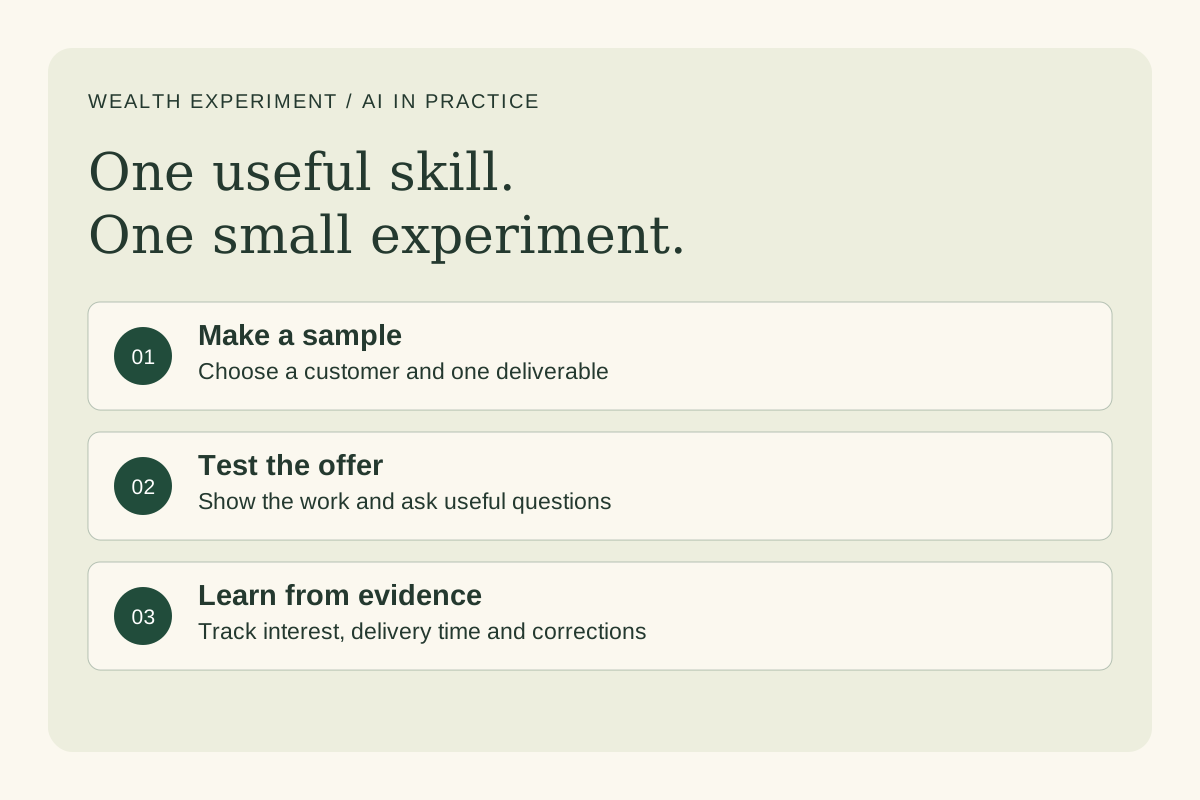
Build a small AI team to test your first side hustle
Set up a small AI team, create a useful service sample and test demand in seven days. Includes role prompts, worked examples and a practical handoff template.
October 23, 2026 · 12 min read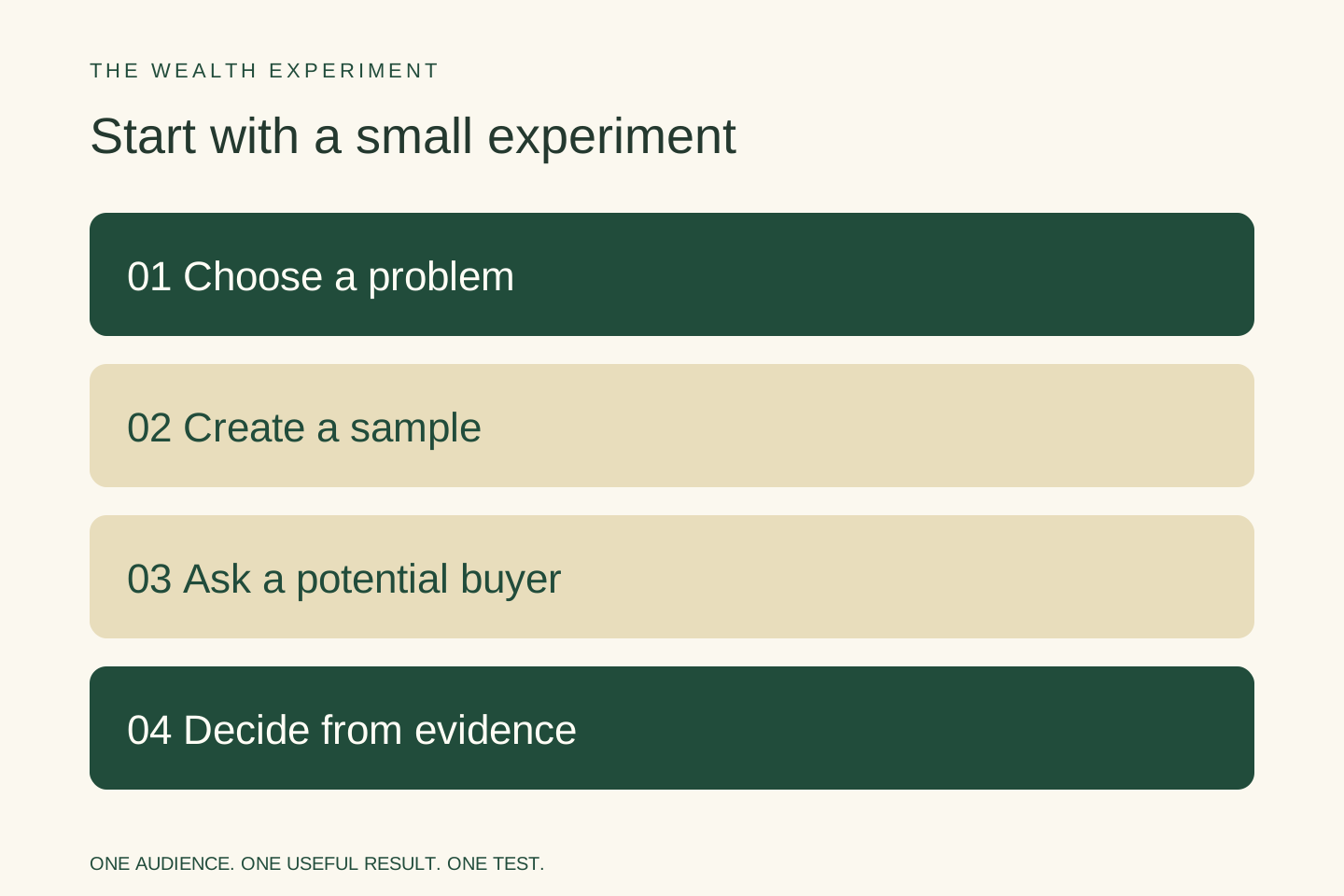 Side-hustle experiments
Will AI pay your bills? Start with a five-day side-hustle test.
Move from a viral income prediction to a useful sample, a customer conversation and a small offer you can evaluate.
October 23, 2026 · 5 min read