Side-hustle experiments
Will AI pay your bills? Start with a five-day side-hustle test.
Move from a viral income prediction to a useful sample, a customer conversation and a small offer you can evaluate.
In this guide
- The useful starting point
- The headline is a prediction, not your income plan
- Day one: choose a problem you already understand
- Day two: make a sample with AI
- Day three: ask potential customers about the task
- Day four: define one small paid pilot
- Day five: decide from the evidence
- Build alongside us at Two Mondays
- Questions you might be asking
- Sources and further reading
The useful starting point
AI can help you make and improve a sample. Income still requires a useful offer, a willing buyer and reliable delivery. Use a five-day test to collect evidence before investing heavily.
A promise that nobody will need to work can be exciting—and unhelpful when you need to decide what to do this week. A small experiment gives you something you can influence. Here is a five-day path from your existing experience to an offer worth testing.
The headline is a prediction, not your income plan
At the September 29 White House meeting, Musk discussed a future of abundance from AI. The published remarks describe an expectation about technology’s effects; they do not establish that a reader can stop earning a living today.
The translated excerpt circulating on social media is not a verified quotation we can responsibly repeat as a promise. For this experiment, leave that promise aside and work on something you can observe: whether a specific person finds your help valuable.
Day one: choose a problem you already understand
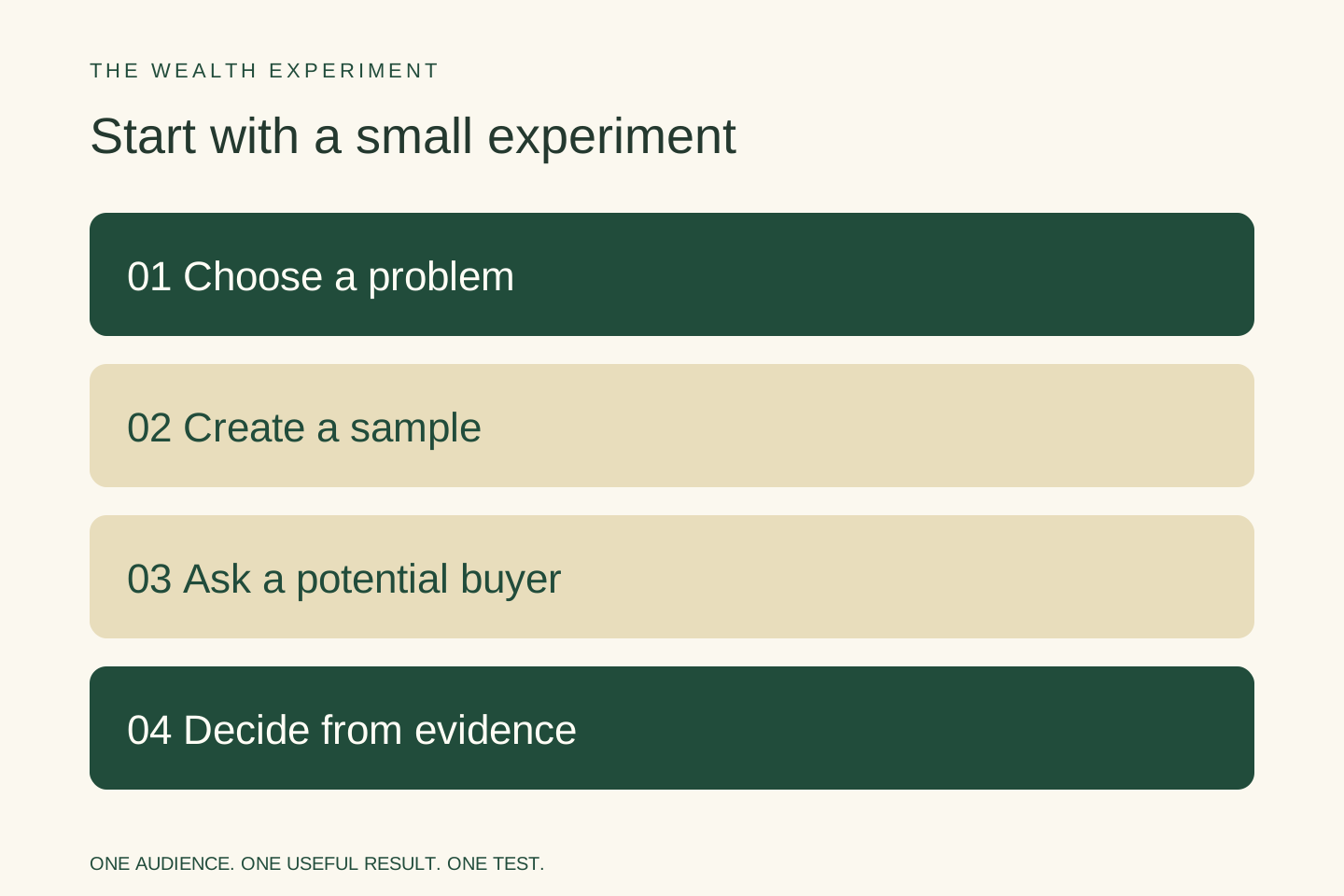
List three questions people ask you at work or in daily life. Perhaps you know how to plan a client kickoff, organize a small event or explain a confusing website. Choose one question and one kind of person who faces it.
Write: “I help this person complete this task by delivering this useful thing.” Keep the result small. A reviewed website clarity checklist is easier to show and improve than an undefined AI agency. These are possible offers to investigate, not established income opportunities.
Day two: make a sample with AI
Create a fictional or permitted example. Ask AI to help organize your ideas, draft the checklist or create the first version of a guide. Check every recommendation yourself. Label the sample clearly so nobody mistakes a demonstration for a client result.
Save the input, the prompt, the first output and your corrections. You are building a repeatable way to deliver useful work. If you cannot explain or check the output, narrow the offer to a subject you understand.
Day three: ask potential customers about the task
Invite a few relevant people to review the sample. Ask how they handle the problem now, which part would help and what is missing. Give them room to say that the task is not important or that they already have a solution.
Record their words and any concrete next step. A like is attention; a conversation is learning; a request for a defined paid pilot is stronger evidence of buying intent. None is the same as received revenue. Keep those signals separate.
Day four: define one small paid pilot
If someone wants help, agree on a deliverable, turnaround, revision limit and price before beginning. Explain what you need from them and what is excluded. Use AI to assist production while you remain responsible for the final work.
Avoid choosing a price from a viral earnings screenshot. Estimate your preparation, delivery, review and support time, plus software and other direct costs. Then discuss the actual scope with the buyer. A small, clearly defined commitment can teach more than a large package built on assumptions.
Day five: decide from the evidence
Record time spent, costs, conversations, requested changes and any payment actually received. Ask: did the buyer understand the offer; did the sample solve a meaningful problem; could I deliver it reliably; and is the effort worthwhile?
Choose one outcome: continue with another small test, change the offer, or pause. If nobody responds, investigate the audience and invitation before building more features. The purpose is to learn where your experience helps, not to prove that every idea must become a business.
Build alongside us at Two Mondays
The free founding cohort of Two Mondays to a Side Hustle runs November 2 and November 9, 2026, from 7–9 p.m. Eastern. Bring a skill or idea, work on a small first version with AI and plan a customer test.
Request a place through the workshop page; availability is confirmed separately. Software and hosting costs may be separate. A completed business or income is not guaranteed. Your immediate goal can be concrete: one useful sample, one clear offer and evidence for your next decision.
Questions you might be asking
Does this require quitting my job?
No. The exercise is deliberately small enough to explore alongside existing responsibilities. Choose a time and spending limit that fits your situation.
Is this passive income?
No. This is an active test of a service or product idea. Customer conversations, delivery, review and support all take work.
Sources and further reading
Sources checked October 23, 2026. Review the linked publisher information for current details.
Put one idea to work
Use the idea revival worksheet to turn a recurring interest into a small test with a clear decision.
Choose an idea worth testing →Explore more from Wealth ExperimentGet the Wealth Experiment field notes →Keep practicing
 Side-hustle experiments
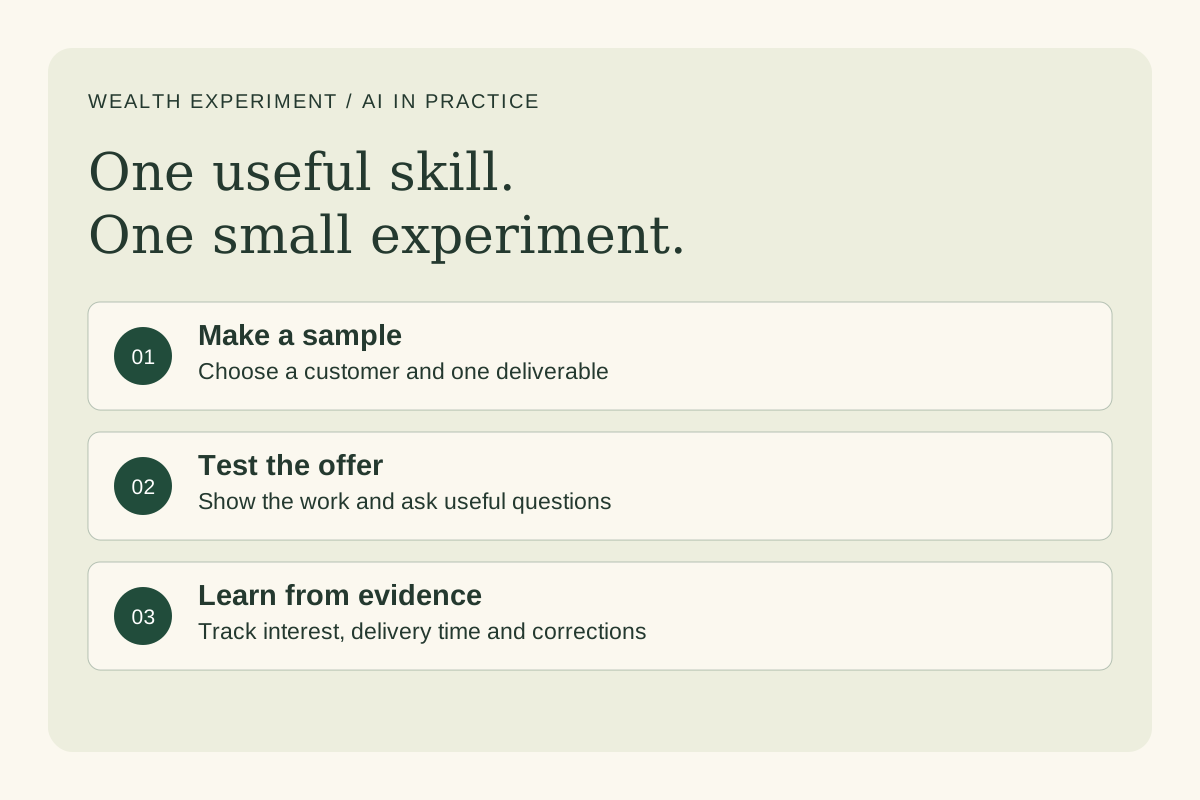
Build a small AI team to test your first side hustle
Use a simple AI workflow to shape a service, make a useful sample and test demand in seven days. Includes a starter prompt and a customer feedback plan.
October 23, 2026 · 6 min read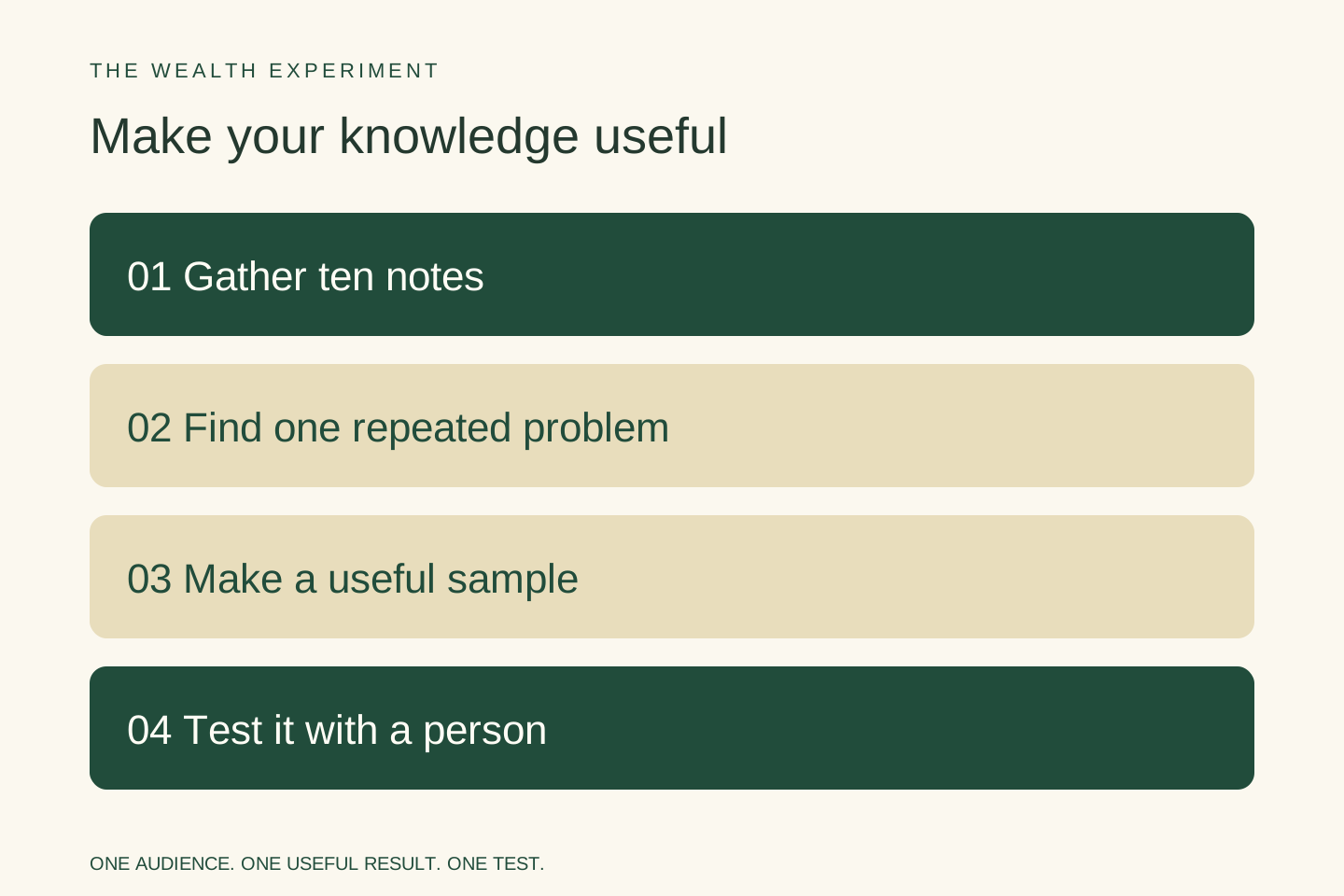 AI & practical learning
Turn ten notes into one useful offer with AI
A simple second-brain exercise for turning your experience into a checklist, guide or service sample worth testing.
October 23, 2026 · 5 min read