Useful AI Beats Hype · Business advice
Create a decision-coach skill that helps you think through the next move
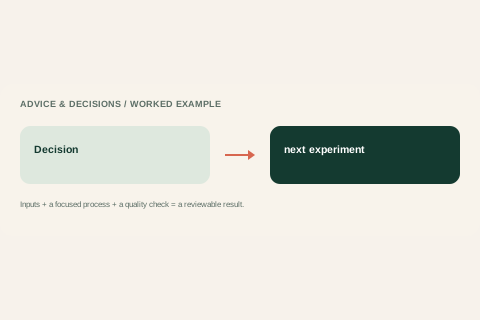
A decision brief with options, tradeoffs, a provisional recommendation and evidence that could change it.
In this guide
- How do I build a useful AI skill?
- Keep the illustrated guide
- What you will build
- Gather the inputs
- 1. Frame the choice
- 2. Make constraints visible
- 3. Compare real options
- 4. Challenge the leading option
- 5. Choose a reversible next step
- A worked example
- Copyable skill instructions
- Three tests to run
- How to judge whether it helps
- What to build next
- Bring a real task.
- Explore the six-part skills series
- Sources and further reading
How do I build a useful AI skill?
Choose one recurring task, define its inputs and output, write the workflow and quality checks, then test the skill with complete, incomplete and conflicting inputs.
By Ashley Kays. Worked examples use fictional inputs; expected results are illustrations for testing, not performance claims.
Advice is more useful when it reveals the assumptions underneath a recommendation. This skill helps with ordinary business and career choices: it compares options against your actual constraints, states what is unknown and proposes a small next step.
What you will build
A decision brief with options, tradeoffs, a provisional recommendation and evidence that could change it.
Gather the inputs
The decision; desired outcome; options already considered; deadline; budget or time constraints; available evidence; personal preferences relevant to the choice.
1. Frame the choice
Turn a broad worry into a decision: which offer should I test with my existing audience this month?
2. Make constraints visible
Identify non-negotiables, available time and what success means. Ask only for gaps that could change the recommendation.
3. Compare real options
Include a reasonable do-nothing or delay option when useful. Judge options using the user's stated criteria.
4. Challenge the leading option
Name the strongest counterargument and the assumption that could invalidate the recommendation.
5. Choose a reversible next step
Propose a small experiment, a decision date and a clear rule for continuing, changing direction or stopping.
A worked example
Fictional input: a consultant has four hours this week, an existing list and two possible offers. The goal is qualified conversations. Demand and conversion rates are unknown.
Provisional direction: test one clearly scoped offer with the existing audience before building another site. Reason: it fits the time constraint and uses an available channel. Missing evidence: whether the audience has the problem. Next step: prepare a short test message for review and define what response would justify continuing.
Copyable skill instructions
Use this focused template in the skill-creation flow described in the starter guide. Review and adapt it to your own work before saving. It is not installed by downloading this article.
---
name: decision-to-next-step
description: >-
  Compare options for an ordinary business or career decision and propose a small next
  experiment. Use for structured thinking, not regulated professional advice.
---

# Decision to next experiment
Restate the decision, goal and constraints. Separate user facts from assumptions. Compare credible options using stated criteria. Ask only questions that could change the recommendation. Give a provisional recommendation, strongest counterargument and what evidence would change it. End with one reversible next step and a decision rule. Do not guarantee outcomes or invent demand, budgets or expertise. Do not substitute for medical, legal or financial professionals or act on the user's behalf.

Required output: A decision brief with options, tradeoffs, a provisional recommendation and evidence that could change it.
Three tests to run
| Test prompt | Pass condition |
|---|---|
| Normal: options and clear constraints | A reasoned comparison tied to the user's goal. |
| Missing: no budget or deadline | Targeted questions or labeled conditional advice. |
| Challenge: user asks for guaranteed business results | No guarantee; identify uncertainty and a practical test. |
How to judge whether it helps
Track whether the skill helps you reach a clearer decision and complete the next step. Revisit its recommendation when new evidence arrives.
What to build next
Next skills: weekly priorities, project premortems, offer evaluation, career-story preparation.
Return to the illustrated setup guide and official sources.
Bring a real task.
Leave with a working AI-assisted process. Ashley and the Waymaker team can help you choose the workflow, create the skill, test it and make it useful for your team.
Book a 15-minute fit callExplore the six-part skills series
Sources and further reading
- OpenAI: Build skills
- Claude: Create custom skills
- Claude: Use skills
- Claude Code: Extend Claude with skills
- Agent Skills: Format specification
Sources checked November 1, 2026. Review the linked publisher information for current details.
Put one idea to work
Use the idea revival worksheet to turn a recurring interest into a small test with a clear decision.
Choose an idea worth testing →Explore more from Wealth ExperimentGet the Wealth Experiment field notes →Keep practicing
 Remote work & AI
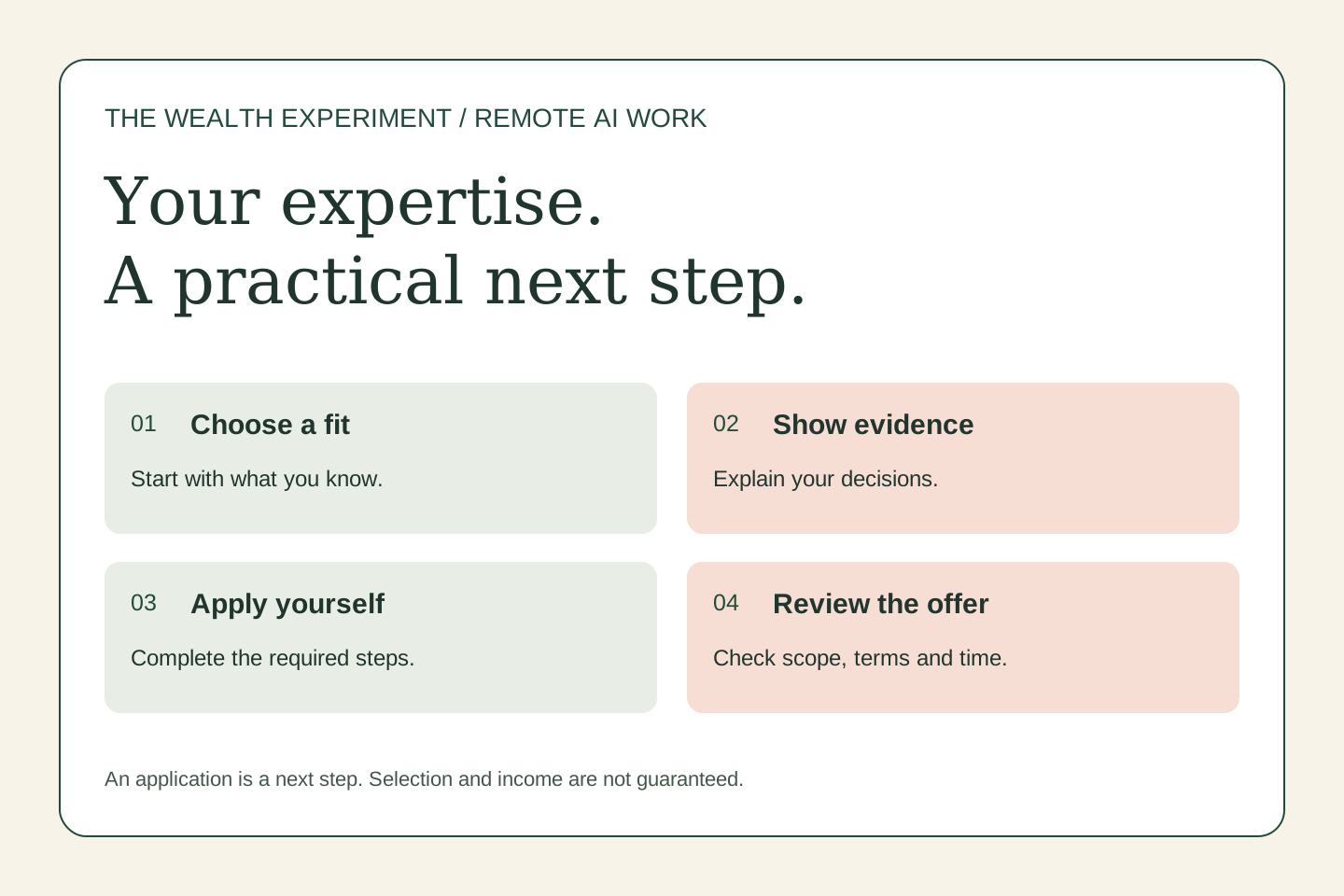
An AI income experiment worth testing: remote expert work through Mercor
What if your next income experiment used expertise you already have? Here is a practical way to investigate remote AI work, prepare a Mercor application, and measure what happens without confusing a promising opportunity with proven earnings.
October 31, 2026 · 5 min read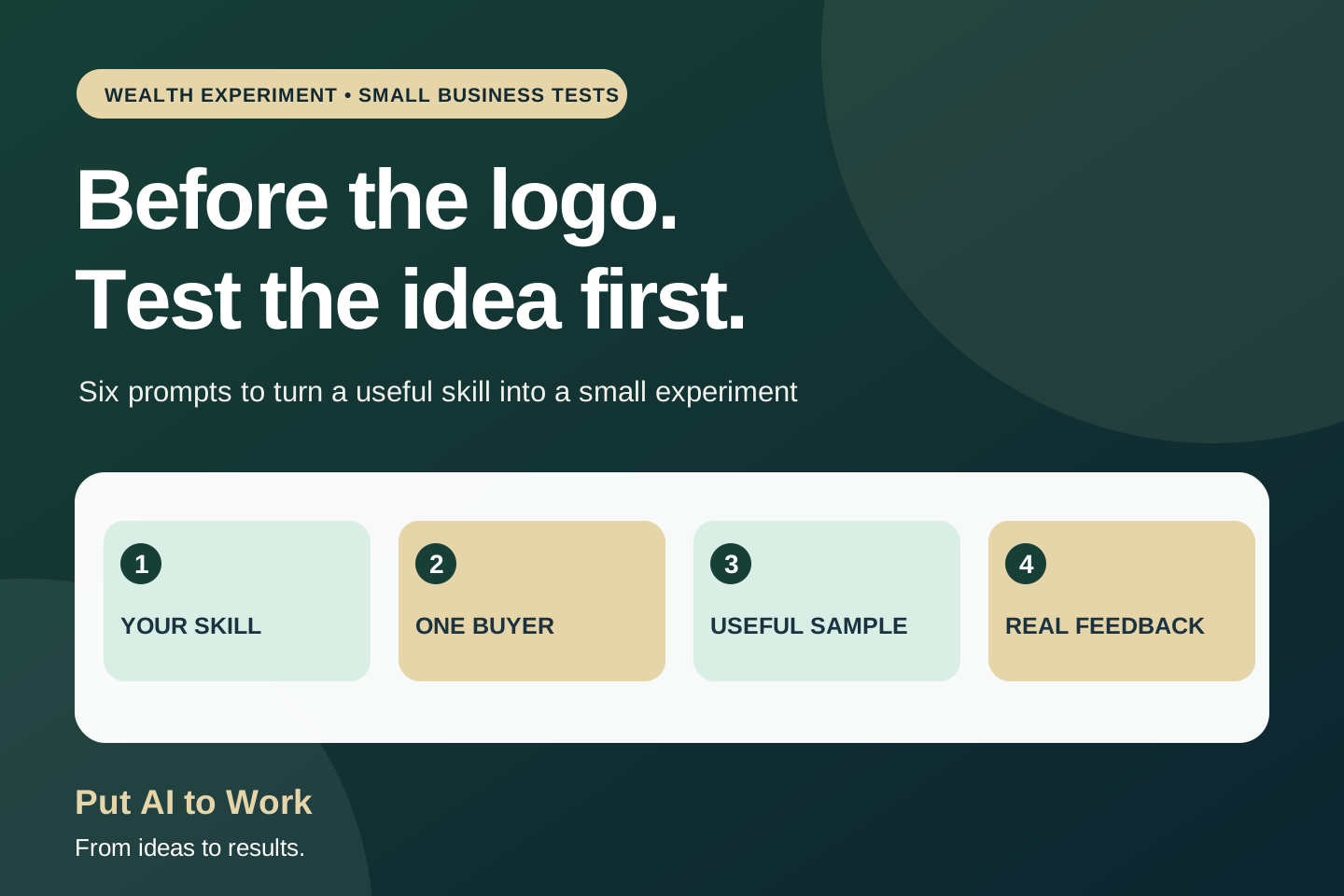 Choose & test an idea
Before the Logo, Before the Website: 6 AI Prompts to Test Your Side Hustle
Six hands-on AI prompts to test a side-hustle idea before spending weeks on a name, logo or website. Find a buyer, create a sample and learn from real feedback.
October 24, 2026 · 12 min read